THE OVERSIGHT ENGINE
A repeatable system behind every engagement.
The Engine connects the full engagement from the question set at the outset to the evidence, analysis, reporting, action and historical readings that follow.
THE CONNECTED PROCESS
Eight stages, one consistent evidence trail.
The stages do not get reinvented for each relationship or each person running them. That consistency is what makes the results comparable over time.
01
Define the desired outcome
Specify the decision the system must support, the partner relationship or portfolio in scope, and the evidence required to inform it. This sets the design requirements for the knowledge framework, maturity model, assessment and reporting.
02
Build the knowledge framework
Codify the principles of effective partner oversight, the evidence that matters and the criteria used to assess it. This provides the foundation for the maturity model and assessment.
03
Set the maturity model
Define observable levels of oversight maturity against the framework. This creates a consistent basis for scoring current practice and showing progression.
04
Configure and deploy the Assessment
Translate the framework and maturity criteria into structured questions, scoring logic and report requirements. Configure the assessment for consistent use across partner relationships.
05
Gather comparable perspectives
Collect responses from relevant internal and partner participants against the same assessment criteria. This creates a shared evidence base for comparison.
06
Analyse and benchmark
Use AI-supported analysis to identify patterns, alignment, differences and outliers. Build comparative insight across relationships and over time as evidence accumulates.
07
Interpret and prioritise
Apply alliance expertise to establish what the findings mean. Translate them into proportionate priorities and clear choices about where to invest, improve, intervene, maintain or reconsider.
08
Report, act and reassess
Connect findings, recommendations and action pathways in the report and portal. Repeat the assessment to measure change, review the effect of action and strengthen the evidence base.
STANDARDISED AND SYSTEMISED
Each service uses the same underlying operating system.
Standard questions create comparable evidence. Common scoring creates a shared scale. Consistent analysis reveals patterns across people, relationships and time.
- Structured assessment - Questions and scoring aligned to the decision and a defined maturity model.
- Multiple perspectives - Internal and external respondents assessed against the same language and criteria.
- Connected evidence - Context, responses, analysis, outputs and later readings remain together.
- Repeatable delivery - The method can be applied consistently across different scopes and applications.
ANALYSIS AND JUDGEMENT
Pattern recognition at scale. Interpretation in context.
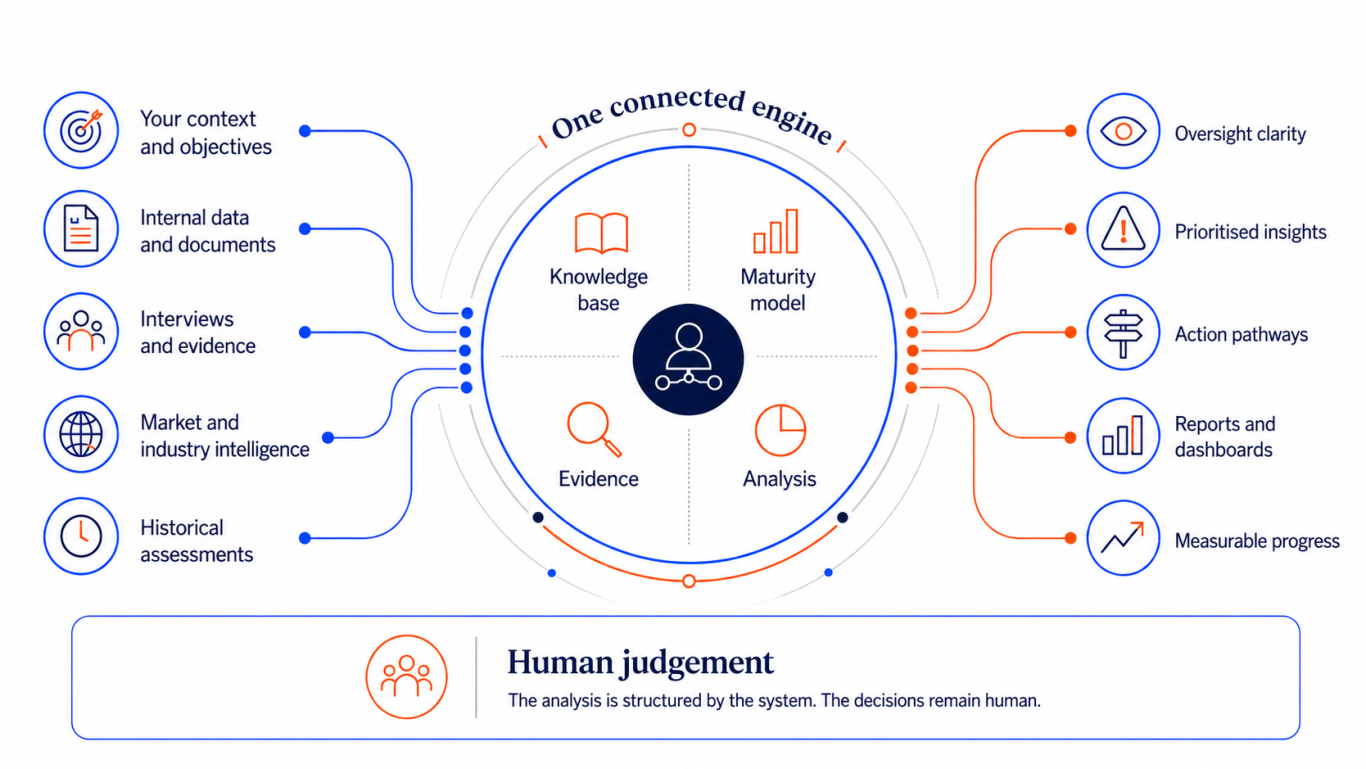
AI-supported analysis makes it practical to compare larger sets of responses, identify outliers and surface recurring themes.
Experienced judgement then establishes why a finding matters in the commercial and strategic context of the relationship. The evidence determines the position; experience sharpens its meaning and the response.
WHY THE SYSTEM MATTERS
One assessment becomes more valuable when the next can be compared with it.
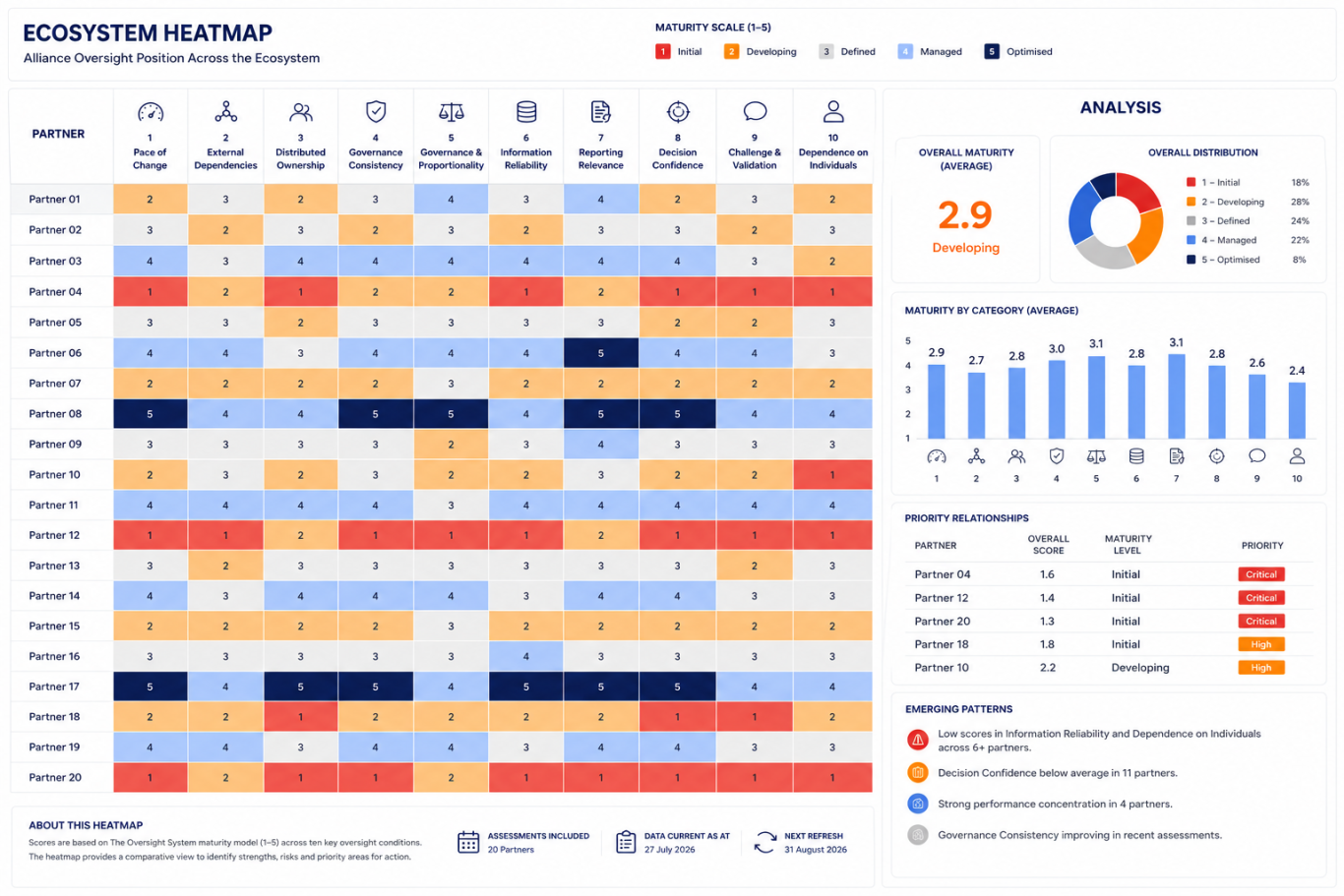
The Engine preserves a baseline. Reassessment can then show whether perspectives moved, interventions worked and the evidence still supports the decisions being made.
This is what turns an assessment into an ongoing oversight capability.
Not sure if there could be something worth a closer look?
Begin with the decision, relationship or area of uncertainty that prompted the question.