IMPROVEMENT PATHWAYS
Is the work delivering the desired outcome?
An improvement pathway uses the assessment as a starting point. At each review, leadership can see what has improved and whether the agreed result is within reach. That evidence guides the decision to continue, change approach or redirect support before committing further budget.

HOW THE PATHWAY WORKS
Agree what success looks like before work begins.
The business defines the result the channel needs to deliver and the evidence that would show it has been achieved. The assessment establishes the starting point and together, we agree what to tackle first, how much improvement to expect and when to review it.
At each review, we reassess on the same scale and check whether the business result has improved. Before committing more budget, you can examine what is still holding back the result and decide whether to continue, redirect support or change the approach.
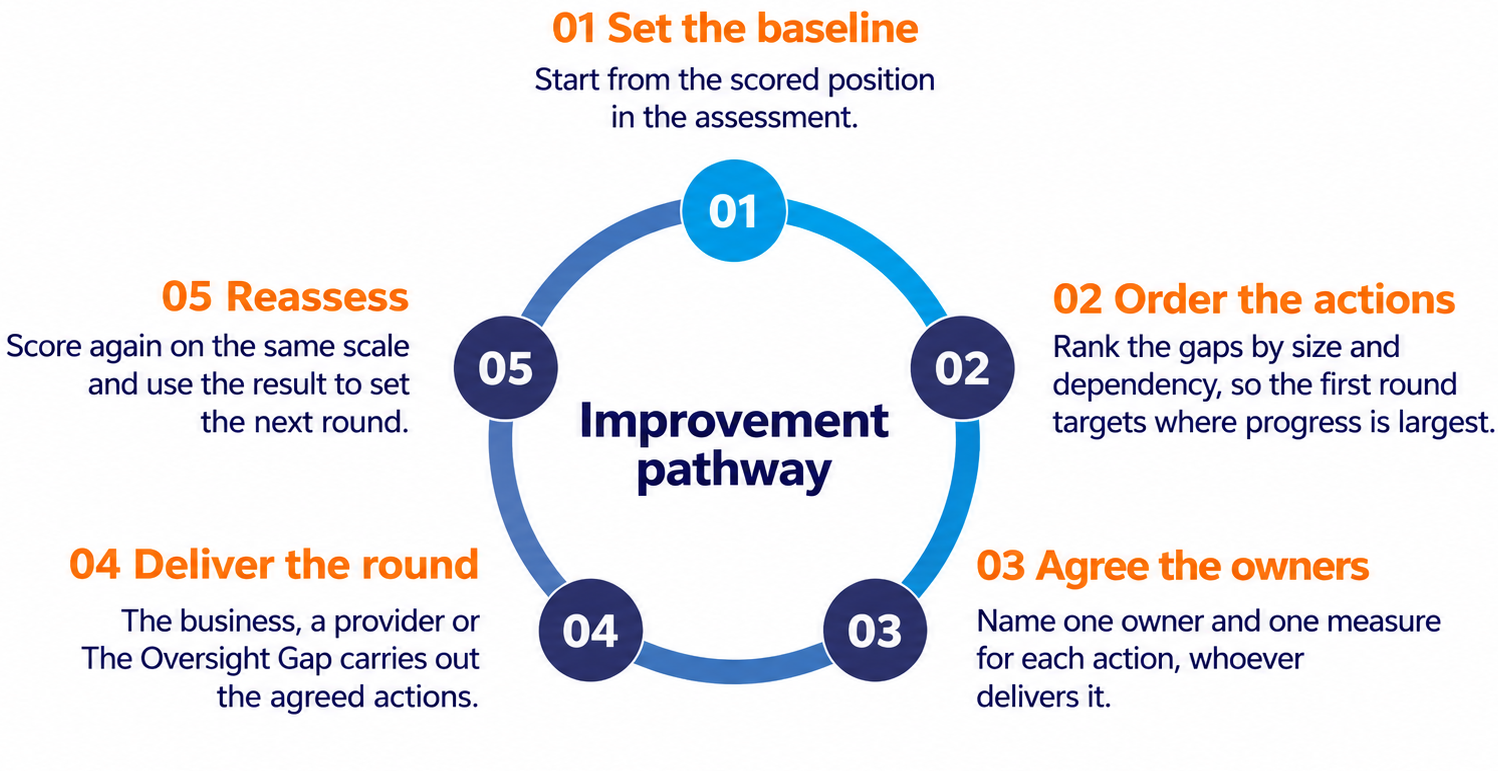
Because every round is scored on the same scale, leadership can see what each one achieved, and delivery can change hands between rounds without losing the thread.
WHAT YOU RECEIVE
A record of what changed and why.
The Pathway brings the agreed outcome, the starting position, and the evidence from each review into one record. It shows what improved (based on maturity score), what still needs attention and why the business chose its next step.
Where the pathway starts
The scored position, with the evidence behind each score and the areas holding the overall level down shown clearly.
Every later result is measured against a fixed point.
What happens next
The next round of actions is set by the result of the last one, ordered by the size of the gap and sequenced by dependency. Where the result shows an action is not working, the route changes.
Each step follows from the one before, not from a plan written once and left.
Who owns it and what done means
One named owner in the business and one measure of done for every action, set against the area the assessment scored and agreed before work begins.
Completion is checked against the evidence, not declared.
The route to the outcome
Each stage shows the new position beside the baseline, area by area, and how far the channel is from the outcome.
The channel keeps moving towards the outcome as it changes.
HOW EVIDENCE DRIVES IT
Every action is set, and checked, against evidence
The baseline is not what the team says about itself.
✔️ Each answer is scored against a defined maturity scale, then tested against the evidence behind it and the problems still being reported. Where the two disagree, the evidence sets the position.
✔️ The same test decides what goes into the plan. An action is only added where the evidence shows a gap, and the gaps holding the overall level down come first.
✔️ It also decides when an action is done. At reassessment, the evidence is tested again on the same scale, so an action counts as complete when the evidence supports it, not when someone reports it finished.
The result is a plan the evidence supports at the start, and a measure of progress the evidence confirms at the end.
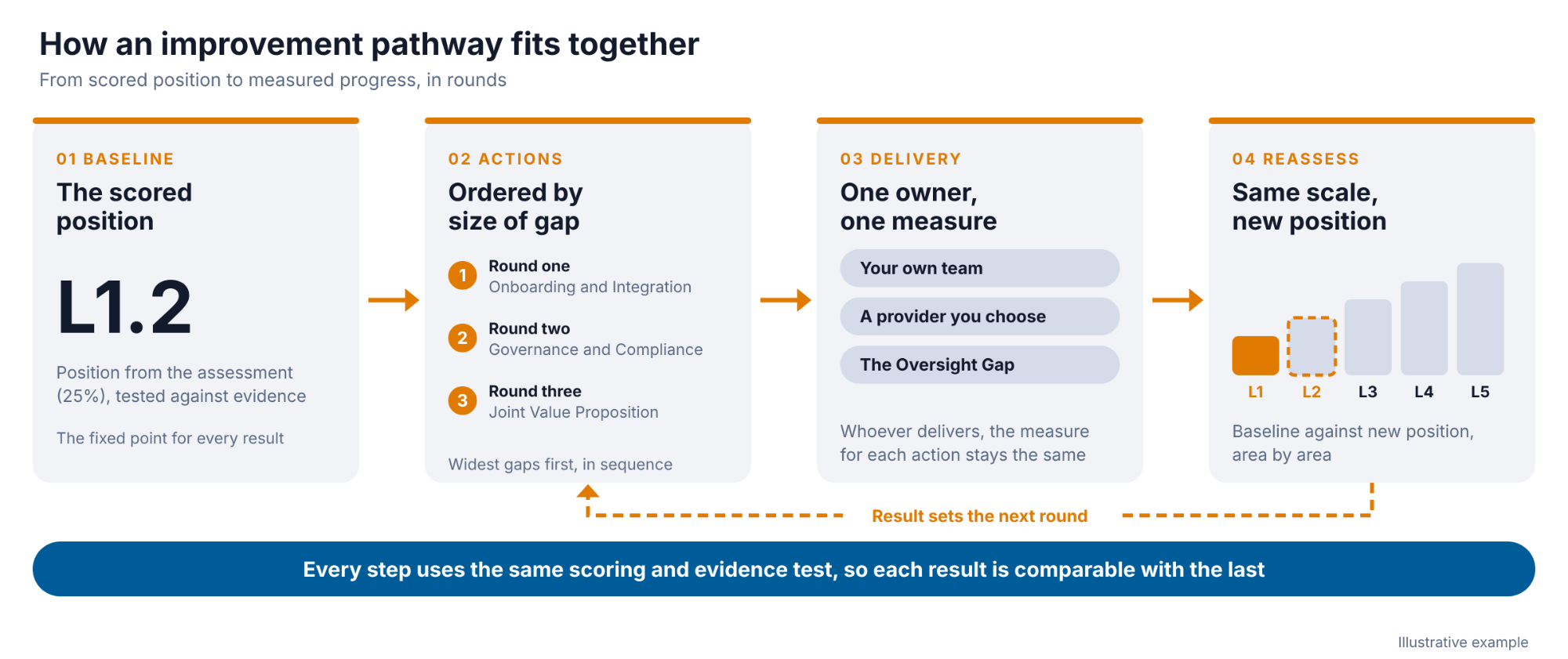
Because every round is scored on the same scale, leadership can see what each one achieved, and delivery can change hands between rounds without losing the thread.
HOW IT CHANGES
When the evidence changes.
The outcome stays fixed. The route to it does not. Each reassessment re-reads your position, re-ranks what is holding the outcome back and changes the actions to match, so effort follows the constraint as it moves.
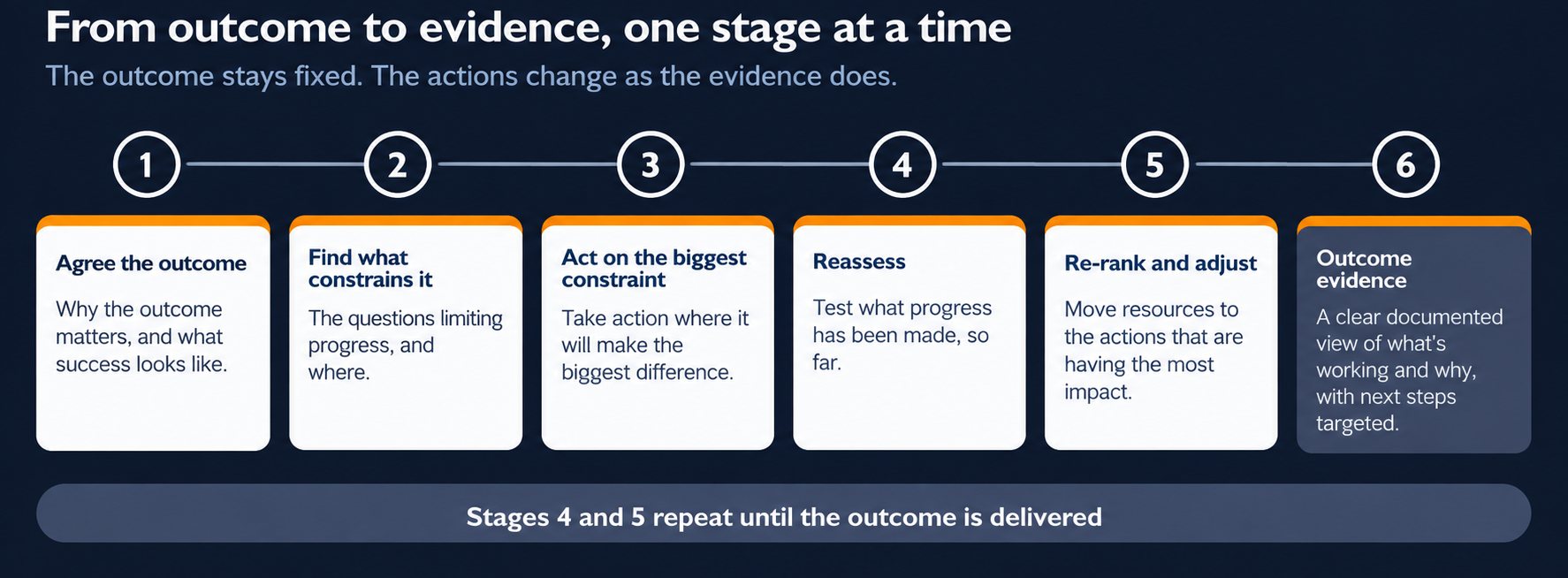
Because every reading uses the same questions and the same scale, a change in the result means something changed in the channel, not in the way it was measured.
WHO CAN DELIVER
You choose who does the work.
The work can stay in-house, go to an existing provider, or be delivered by The Oversight Gap.
Whoever delivers, you can see what has improved and decide whether to continue or change course.
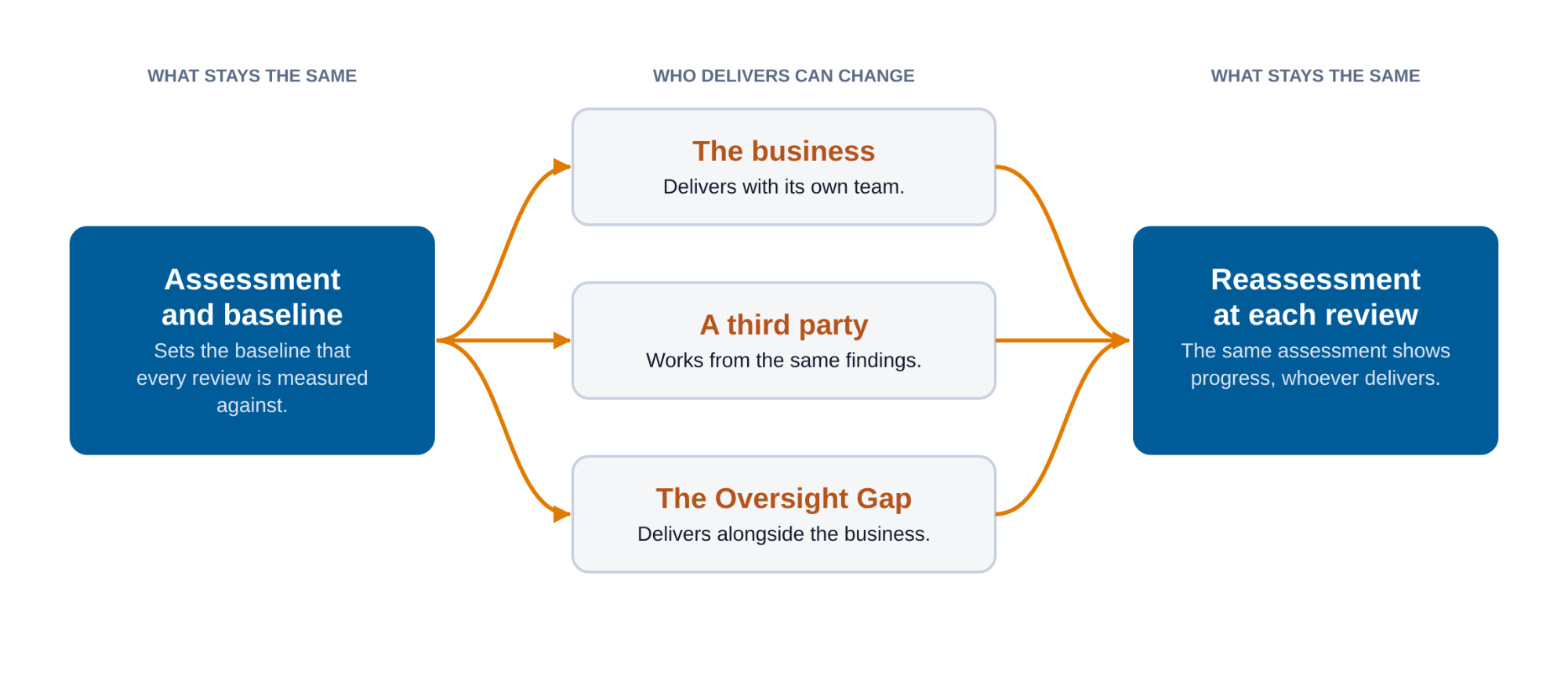
Because every round is scored on the same scale, leadership can see what each one achieved, and delivery can change hands between rounds without losing the thread.
WHY IS THIS DIFFERENT TO A PROJECT PLAN?
A project plan tracks tasks, an Improvement Pathway tracks outcomes.
A project plan is the right tool for getting tasks done, and it is complete when they are. A pathway is built around the outcome the business has set. After each round the channel is scored again with the evidence tested, and the result decides what happens next, so the work follows the outcome and not the task list. It continues until that outcome is reached.
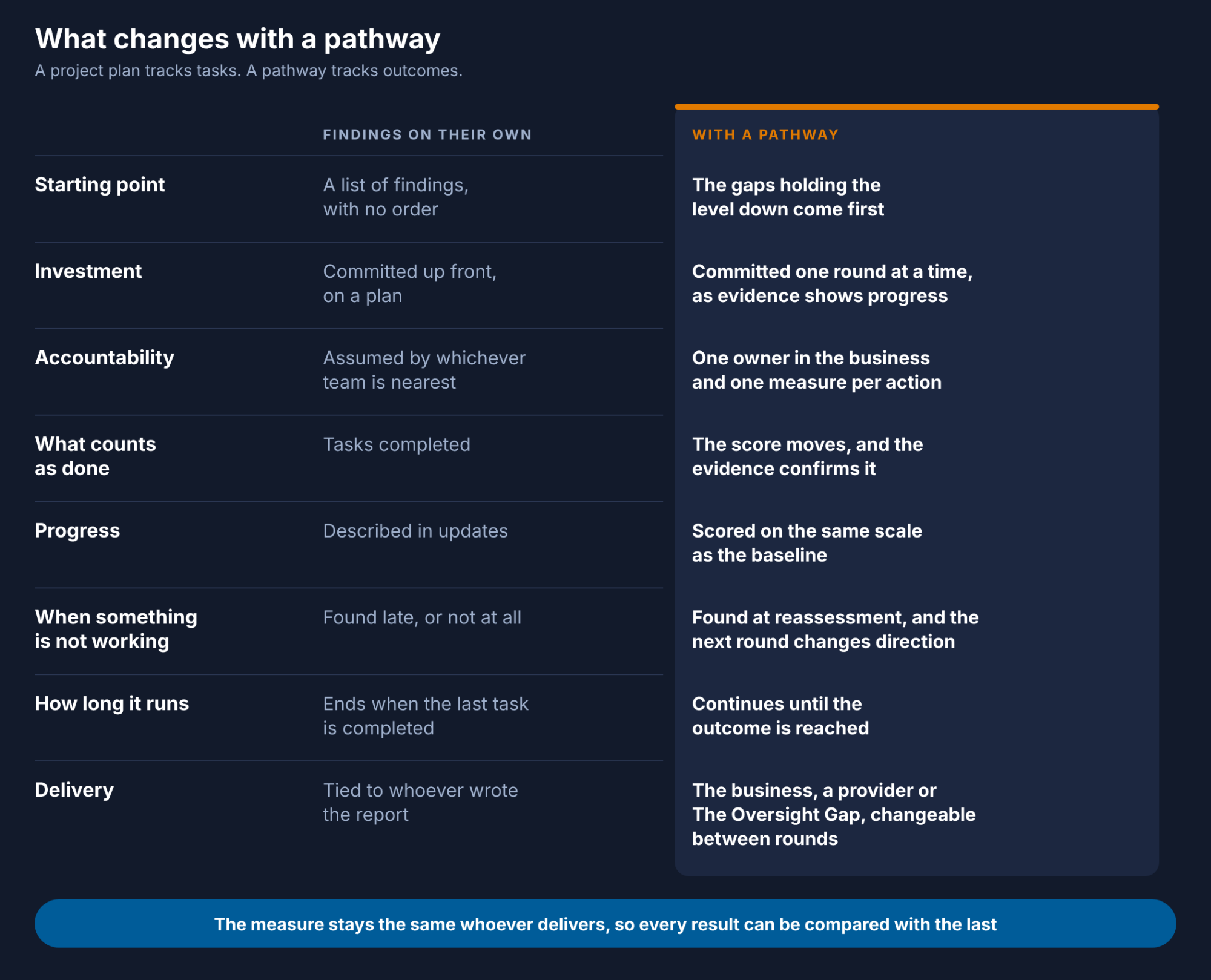
Because every round is scored on the same scale, leadership can see what each one achieved, and delivery can change hands between rounds without losing the thread.
QUESTIONS BUYERS ASK
Frequently asked questions.
Can this work alongside our existing project plan?
Yes. The team can keep its delivery plan. The pathway gives leadership a review point to judge whether the work is producing the agreed channel result.
Who can deliver the work?
The business can use its own team, appoint a provider or work with The Oversight Gap. The same measures apply if delivery changes hands.
What if the assessment score improves but the business result stays the same?
The review examines what improved and where the problem persists. That helps leadership decide what to change before funding more of the same work.
How much work do we commit to upfront?
The business agrees the scope of the first round. It reviews the result before committing further time or budget.
How will we know whether the changes are working?
Your improvement pathway sets out the actions, owners and measures. We reassess against your starting point to see what’s improved and what needs adjusting.
NEXT STEP
What does the channel need to achieve?
Book a 30-minute call to discuss the outcome, the evidence already available and what the first review would need to establish.