PARTNER ECOSYSTEM VISIBILITY
A clearer evidence base for decisions across your partner ecosystem
The Visibility Assessment brings reporting, internal knowledge, leadership priorities and partner perspectives into one structured view. It helps you compare relationships consistently, understand what is influencing performance and decide where attention and investment are most likely to improve the outcome.
It can be used for one strategically important relationship, a selected group of partners or an entire channel ecosystem.
Why the Visibility Assessment was developed
Partner ecosystems are usually managed relationship by relationship. Performance reporting, account plans, partner reviews and experienced teams provide valuable information about each one.
Many of the decisions leadership needs to make, however, extend beyond a single relationship. Deciding where to invest, how to allocate resources or which partners should receive greater attention requires several relationships, perspectives and sources of evidence to be considered together.
That becomes difficult when information has been gathered for different purposes, sits across different teams or reflects different points in time. Each source may be valid, but it was not necessarily designed to provide a comparable view across the ecosystem.
The Visibility Assessment was developed to create that view while retaining the context that makes every relationship different.

The challenge is no longer understanding each relationship separately, it is establishing how they compare when leadership has to decide where to focus.
Portfolio decisions require portfolio evidence
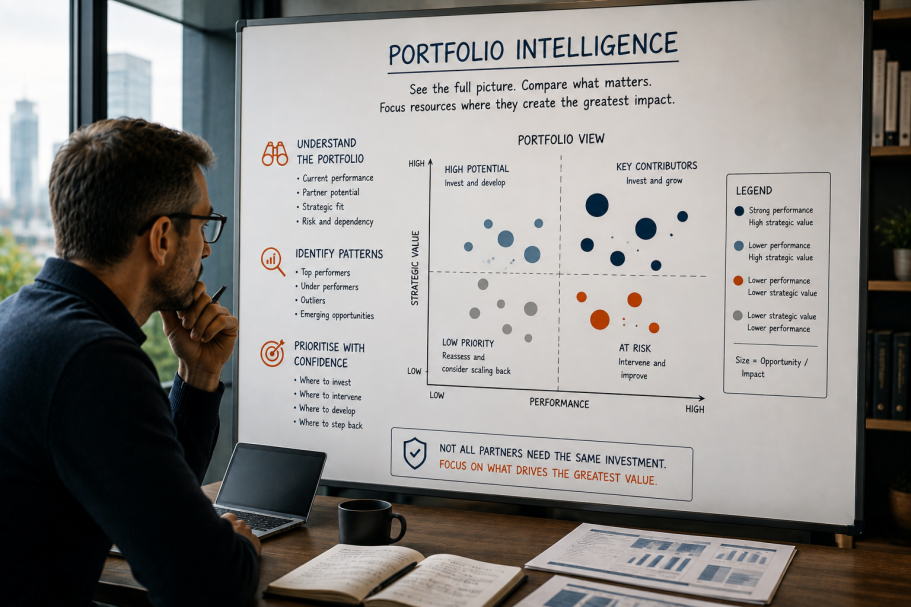
A partner can appear strong when considered in isolation and look very different when compared with the strategic alignment, capability and opportunity available elsewhere in the ecosystem. Current performance may reflect historic investment rather than future potential, while a less prominent relationship may offer capabilities or opportunities that have not yet been fully developed.
The purpose is not to replace the information already available. It is to bring the relevant evidence and perspectives together consistently, so leadership can understand the relative position of each relationship and see where the strongest case for attention, action and investment exists across the portfolio.
What the Visibility Assessment is
The Visibility Assessment is a structured engagement built around a management decision or a defined set of questions. It establishes what needs to be understood, identifies the relationships and perspectives that matter, and creates comparable evidence across the agreed scope.
The assessment can examine the ecosystem at several levels: the portfolio as a whole, a defined partner group, one important relationship, the internal organisation supporting the ecosystem or a combination of these.
Decision-led: The starting point is the decision that needs to be made, rather than a standard questionnaire applied without context.
Multi-perspective: Relevant views can be gathered across leadership, internal teams, relationship owners and partners, allowing areas of agreement and meaningful difference to be examined.
Comparable: The same framework and criteria are used across the agreed scope, creating evidence that can be compared without treating every relationship as though it were identical.
Repeatable: The framework creates a baseline that can be applied across more partners and revisited over time to measure movement.

The framework remains consistent, but the way it is applied is determined by the decision the organisation needs to make.
Start with the decision, not the assessment
The right scope depends on what leadership is trying to decide. A question about one strategic alliance may require a focused examination of that relationship, including how it is viewed internally and by the partner. A resource-allocation decision may require the wider portfolio to be compared, while another question may be answered by examining a selected group of partners or an internal team.
Starting with the decision establishes which relationships, participants and evidence sources need to be included, and how deeply they should be examined. This keeps the work proportionate and ensures the findings are directly connected to the action leadership is preparing to take.
What the assessment delivers
The assessment turns evidence gathered from across the relevant relationships, teams and perspectives into a clear, decision-ready view. It shows where the evidence supports the current management position, where different perspectives need to be reconciled and where a change in attention, investment or approach may be justified.
The output is shaped around the decision defined at the outset. Rather than producing a generic report, it gives leadership the specific evidence, comparisons and priorities needed to determine what should happen next.

Where should we invest?
Compare alignment, capability, opportunity, engagement and performance to identify the relationships with the strongest case for further support.

Why is performance uneven?
Look beyond the result itself to understand whether differences are being driven by strategic fit, capability, commitment, internal ownership, opportunity or execution.
Which relationships have changed?
Understand whether priorities, commitment, capability or competitive attention have moved since the relationship was last considered in depth.
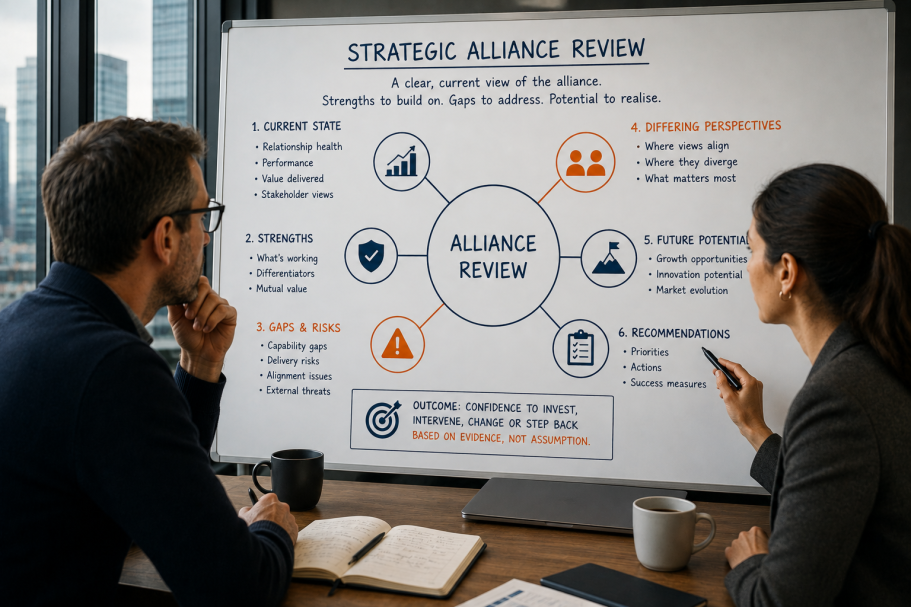
Where do stakeholders see things differently?
Establish where leadership, internal teams and partners are aligned and where different expectations or interpretations require attention.
Are resources aligned with current priorities?
Compare where time, budget and management attention are being spent with the relationships and opportunities that now matter most, as opposed to historically.

What should happen next?
Distinguish between relationships that warrant greater investment, focused improvement, management intervention, continued support or reconsideration.
The scope follows the question
Greater visibility does not require every partner and stakeholder to be assessed on every occasion. The scope should be broad enough to provide the evidence leadership needs, while remaining focused enough to keep participation, analysis and disruption proportionate to the decision being made.
One strategic relationship can be examined in depth, bringing together the perspectives of leadership, internal teams and the partner. A selected group of relationships can be compared against consistent criteria, or an entire channel can be assessed when the decision concerns portfolio priorities, investment or resource allocation. The scope can also be extended over time as new questions emerge.
What can be included
The work can focus on one strategically important relationship, compare a selected group of partners or examine the wider channel. It can also look inward at the teams, ownership and decisions that shape how the ecosystem is managed.
The partner portfolio: The complete channel or a selected group of partners can be compared to identify patterns, concentrations of potential and differences in performance or alignment.
Individual relationships: A strategically important or underperforming relationship can be examined in greater depth, including how it is viewed by each side.
Leadership expectations: The outcomes, priorities and level of contribution expected from the ecosystem can be compared with the way relationships are currently being managed and experienced.
Internal teams: Alliance, channel, sales, marketing, operational and other relevant teams can contribute their knowledge of how the relationships work in practice.
Partner perspectives: Where appropriate, partners can provide their view of the opportunity, strategic alignment, engagement, capability and what is required for the relationship to progress.
Existing evidence: Performance reporting, account plans, governance material and other relevant sources can be incorporated so that the assessment builds on what is already known.
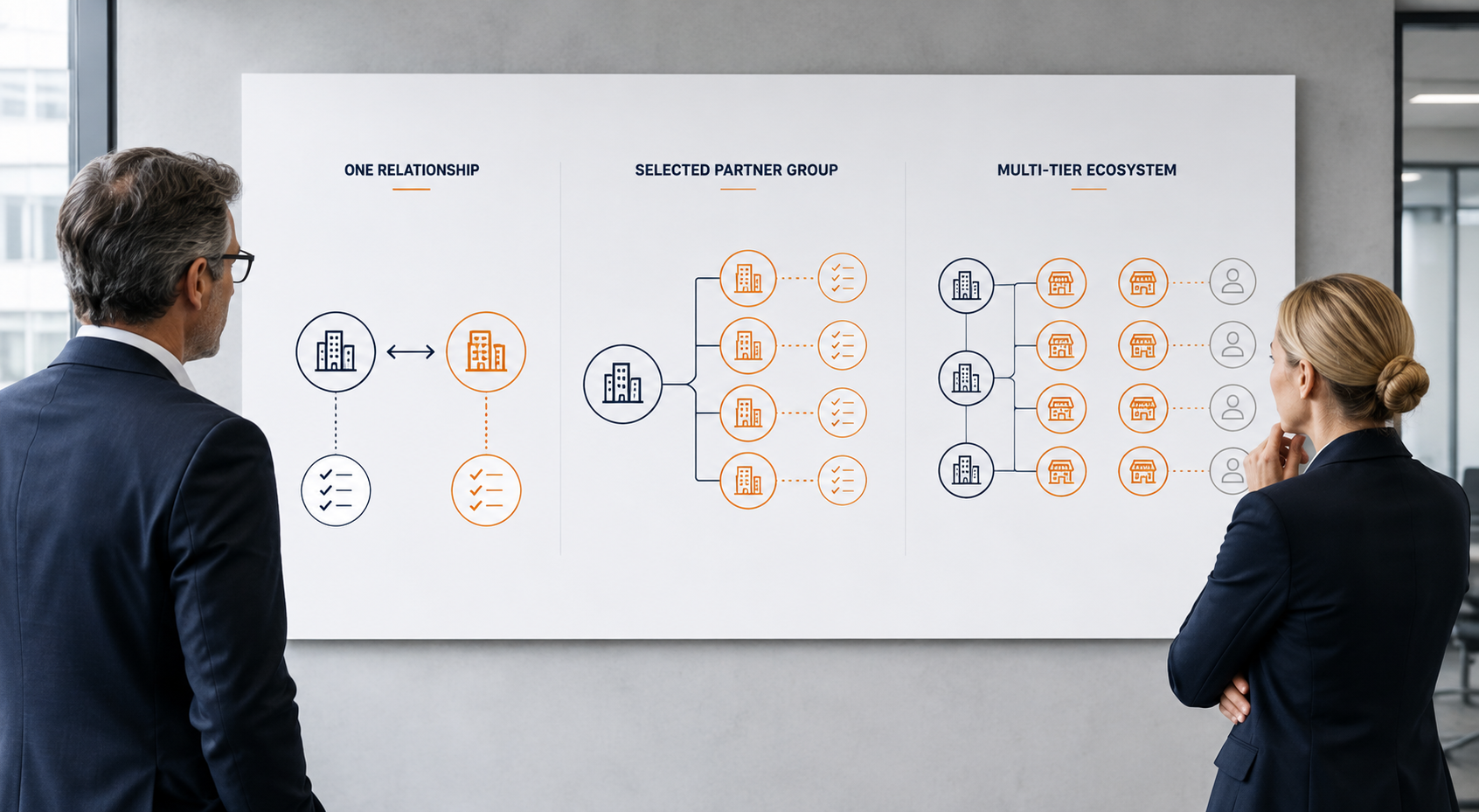
AI enables assessment and analysis at any scale.
Comparison needs a common basis
Different relationships may require different responses, but the decisions still need to be founded on evidence that can be compared. If every partner is considered through different questions, criteria or expectations, it becomes difficult to know whether the differences reflect the relationship itself or simply the way it was examined.
A common framework creates a consistent basis for comparing alignment, capability, commitment, opportunity and performance across the ecosystem. This does not mean treating every relationship as though it were the same. The individual context remains important, but it is considered within a shared structure that allows leadership to identify meaningful differences, recurring patterns and genuine outliers with greater confidence.
The Visibilty Assessment
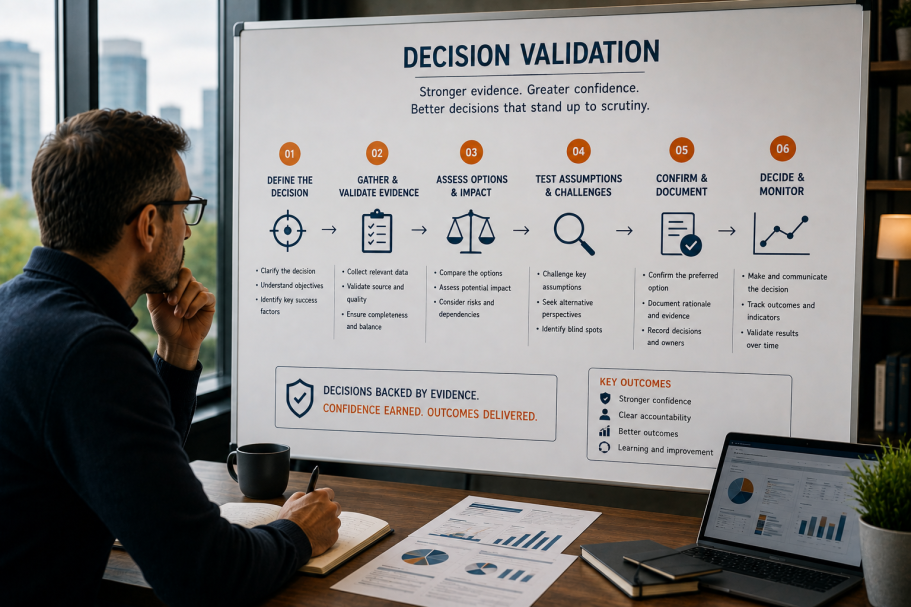
The Visibility Assessment follows a structured process that connects the original leadership question to the evidence, analysis and action that follow. Each stage has a defined purpose, ensuring that information is gathered consistently, interpreted in context and translated into decisions rather than simply presented as findings.
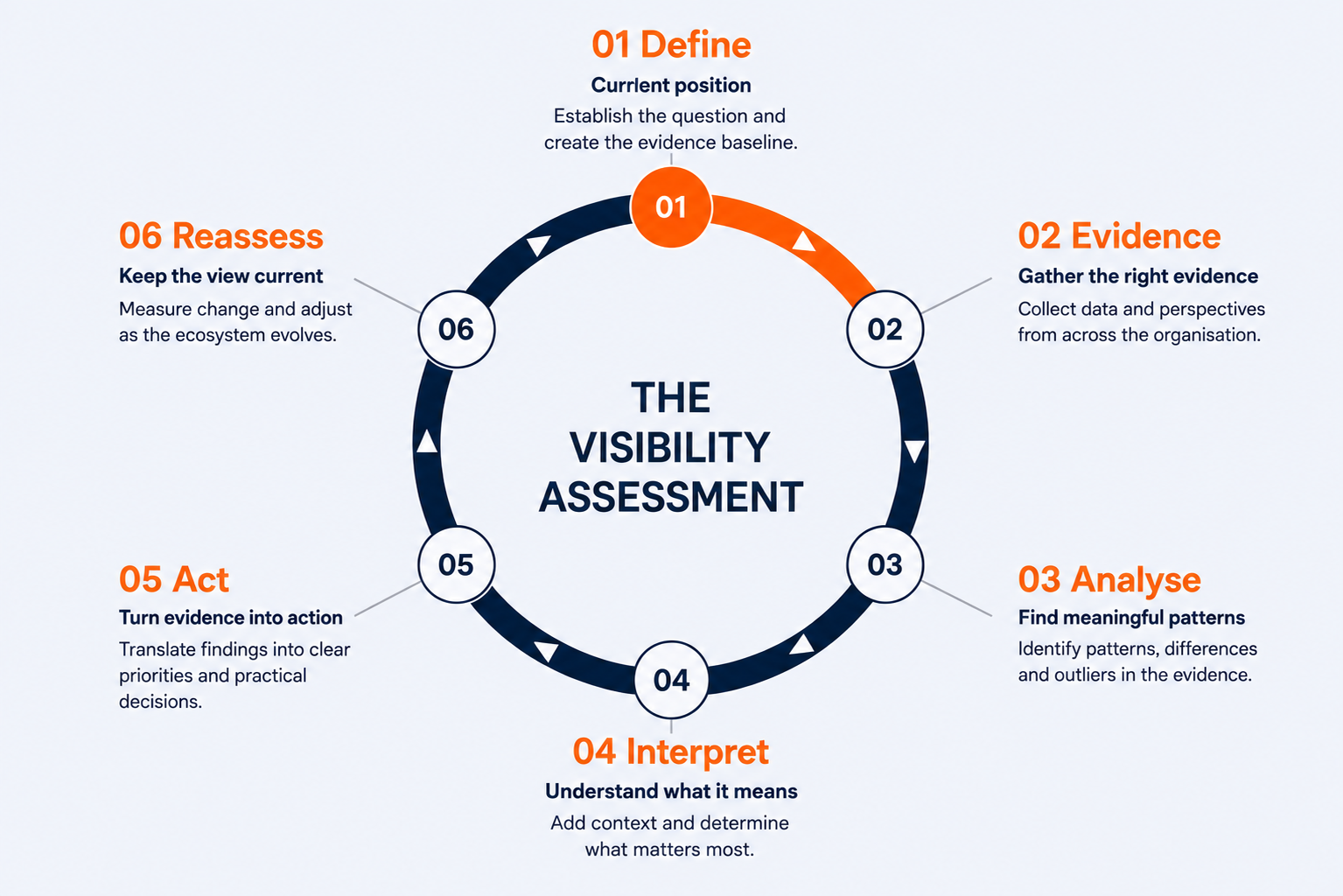
The process does not end when the initial assessment is complete. Recommendations can be acted upon and the same framework used again to measure progress, test whether the intended improvement has occurred and keep the view current as the ecosystem continues to evolve.
Scale the analysis without losing the relationship
An ecosystem view must reveal patterns across the portfolio without reducing important relationships to a single score or ranking. Its value lies in showing what is recurring, where perspectives consistently diverge and which relationships differ enough from the wider picture to require closer attention.
Standardisation makes meaningful comparison possible, while scalable analysis identifies patterns and outliers across larger numbers of partners and participants. Interpretation then restores the strategic and commercial context needed to understand what those findings mean for each relationship.
This allows leadership to see the ecosystem as a whole without losing the individual circumstances that determine what should happen next.
One system, eight capabilities, any scope.
Every Visibility Assessment is supported by the same connected capabilities, whether the work examines one strategically important relationship, a selected partner group or an entire channel. Together, they create a consistent route from defining the question and gathering evidence to comparing perspectives, identifying patterns and supporting management action.
The scope may change, but the underlying approach remains consistent. This keeps the evidence comparable as participation expands and allows the assessment to be repeated without losing the context of individual relationships.ssing, one relationship or your whole channel, the same connected capabilities do the work underneath. That's what keeps every result comparable, not just believable on its own.
Knowledge framework
Grounds the assessment in how your channel operates.
Your commercial model, partner roles, governance arrangements and priorities are incorporated into a structured channel visibility framework.
Assessment and maturity model
Creates a consistent standard for every participant.
Questions, criteria and maturity levels establish a common language against which responses can be assessed and compared.
Deployment design
Applies the assessment at the level where visibility is needed.
The engagement can focus on one relationship, a partner portfolio or multiple tiers of the wider ecosystem.
Shared diagnostic
Collects multiple perspectives through the same assessment.
Your organisation and/or multiple participating partners respond to the same questions, creating evidence that can be compared directly.
AI and analytics
Reveals patterns that manual reviews cannot identify at scale.
AI analyses responses across every participant, identifying alignment, divergence, recurring issues, outliers and emerging priorities.
Comparison and benchmarking
Places every response into context.
Results can be compared relationship by relationship, across a partner portfolio, between ecosystem tiers and against the defined maturity model.
Human interpretation
Adds the context, challenge and judgement AI cannot provide alone.
Alliance expertise tests the findings, explores their significance and distinguishes meaningful signals from background noise.
Reporting and priorities
Converts evidence into clear decisions and action.
Reports, heatmaps and prioritised findings show where to invest, where to intervene, where support should change and where stepping back may be appropriate.
No single capability produces the complete view on its own. Their value comes from working together as one system: configured around the decision, consistent enough to support comparison and flexible enough to reflect the realities of the ecosystem being assessed.
The assessment does not end with a score
A score can indicate where to look, but it cannot decide what the organisation should do. Two relationships may receive a similar result for entirely different reasons, requiring different levels of attention and very different responses.
The value comes from understanding the evidence behind the result, the patterns across the ecosystem and the implications for the decision being considered. That context helps leadership distinguish between an isolated concern, a recurring portfolio issue and an opportunity that warrants greater investment.
What you receive
The precise output reflects the decision being considered and the scope of the engagement. A focused review of one relationship will require a different level of detail from an assessment covering an entire channel, but both are designed to give leadership a clear account of what the evidence shows and why it matters.
The findings are brought together as a connected decision pack rather than a collection of disconnected scores or observations.
Executive decision brief: A concise account of the decision examined, the material findings and the priorities requiring leadership attention.
Partner and portfolio heatmaps: A consistent visual comparison across relationships, assessment areas and stakeholder groups.
Perspective comparison: A clear view of where leadership, internal teams and partners are aligned, and where material differences need to be understood.
Relationship and portfolio patterns: Recurring strengths, barriers, risks and opportunities that may not be visible when relationships are reviewed separately.
Prioritised findings: The issues and opportunities most relevant to the original decision, separated from observations that are less likely to affect the outcome.
Management recommendations: Clear recommendations covering where to invest, improve, intervene, maintain or reconsider.
Improvement pathways: Where action is required, findings can be translated into a structured pathway covering the desired outcome, underlying cause, ownership, actions, measures and review points.
Repeatable baseline: A consistent starting point against which future movement and the effect of management action can be assessed.

Taken together, these outputs provide more than a description of the current position. They connect the original leadership question to the evidence, show which findings matter most and create a practical basis for deciding where attention and resources should now be directed.
Visibility becomes valuable when it changes what happens next
The purpose of bringing the evidence together is to support a better decision, not to create another report. The findings should help leadership distinguish between relationships that require action, those that warrant continued support and those where the current approach is already producing the intended result.
In some cases, the evidence will strengthen the case for further investment. In others, it may reveal a specific barrier, a difference in expectations or a level of resource that is no longer proportionate to the opportunity.
The value lies in turning those distinctions into clear priorities, so management attention and investment can be directed towards the relationships and actions most likely to make a meaningful difference.
Not sure where to begin?
You may already have a specific relationship, portfolio question or investment decision that needs stronger evidence behind it. If you do, the most useful starting point is a conversation about that decision and what would need to be examined.
If the concern is broader, or you are not yet sure where closer attention would be most valuable, the complimentary Visibility Snapshot provides a simpler starting point.
Fifteen structured questions consider how change, evidence, alignment, accountability and emerging warning signals are currently handled across the partner ecosystem. The result provides an initial indication of where the current approach appears well supported and where further examination may be useful.

The Snapshot is not a diagnosis and does not replace the full Visibility Assessment. It helps clarify the question, identify possible priorities and determine whether a more detailed conversation would add value.