See where stakeholders are working from different views
Leadership, internal teams and partners can each hold a reasonable but different understanding of the same relationship. One group may believe the priorities are clear while another experiences conflicting expectations, limited support or commitments that have not been recognised elsewhere.
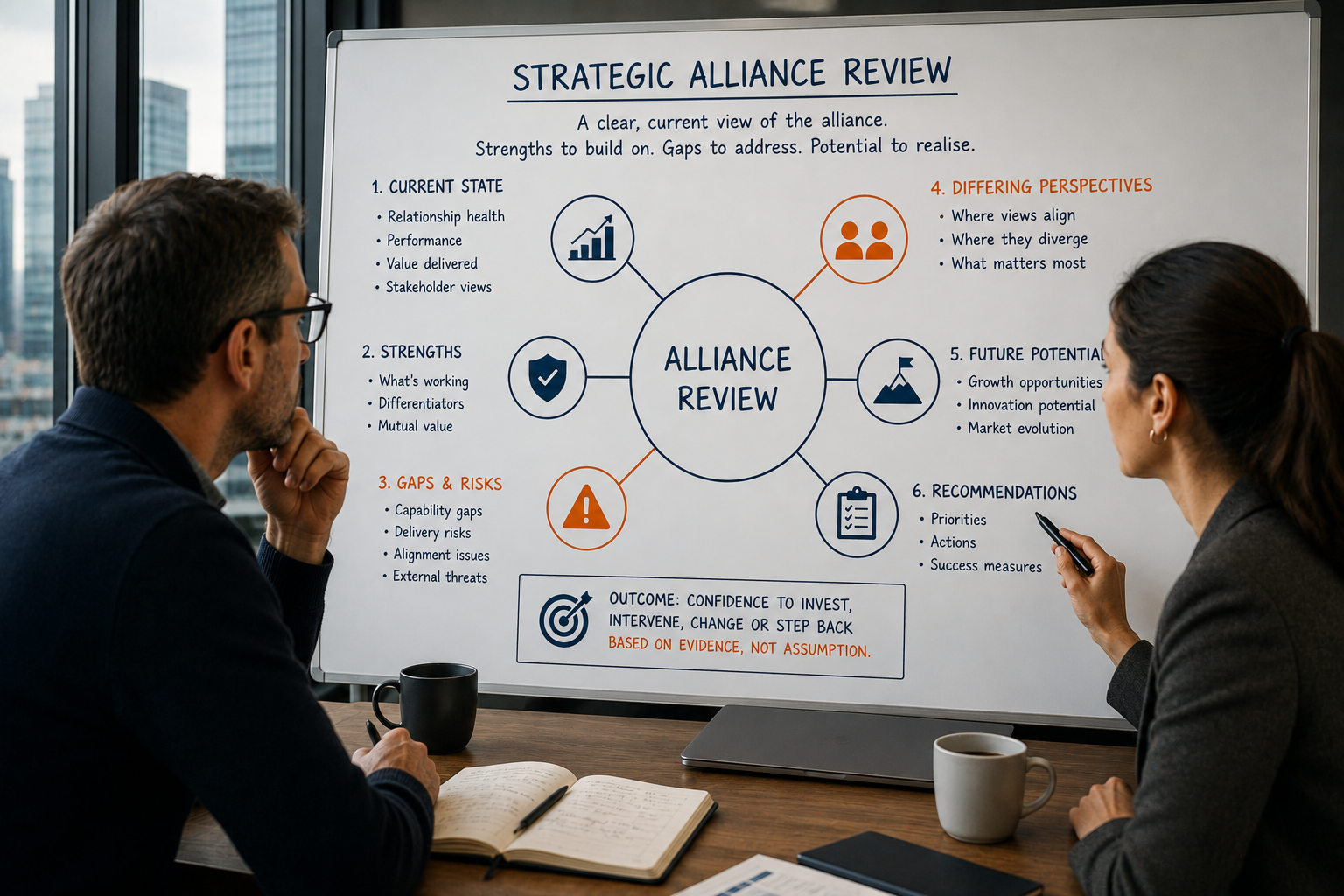
The Visibility Assessment compares those perspectives through the same questions and criteria, making material differences visible without assuming that every variation represents a problem.
Agreement at a high level can hide practical misalignment
Most stakeholders will agree that the relationship should grow, improve or create greater value. The differences usually emerge beneath that broad ambition: what success means, which opportunities matter, who owns the next step, what each side has committed and whether the required support is actually available.
Those differences can remain hidden when each group reports through its own meetings, language and measures. The relationship appears aligned because the underlying views have never been compared directly.
Make the differences visible
The relevant participants assess the relationship against a shared framework covering its purpose, priorities, contribution, capability, ownership, governance and confidence in the available evidence. Their responses are analysed to show where views align, where they diverge and how significant the difference is to the decision being considered.
Experienced interpretation separates differences that can be explained by role or perspective from those that indicate unclear expectations, weak accountability or a genuine disagreement about the relationship’s direction.
Turn general misalignment into a precise conversation
The result gives leadership a precise basis for the conversation that needs to take place. Rather than discussing a general concern about alignment, the parties can address the expectation, commitment or decision on which their views differ.
This can lead to clearer ownership, revised priorities, more realistic commitments or confirmation that the relationship is better aligned than individual conversations suggested. The same evidence provides a baseline for checking whether the agreed changes have brought those perspectives closer together.
Establish whether the relationship is genuinely aligned
If different stakeholders appear to be working towards the same outcome but the relationship is not progressing as expected, the conversation can begin with the perspectives that need to be compared.